Recent Trump Videos Sparking Racial Concerns
In the early hours of February 6, 2026, President Donald Trump ignited widespread outrage by sharing a video on his Truth Social platform that depicted former President Barack Obama and former First Lady Michelle Obama as apes in a jungle setting.
The one-minute clip, embedded within a broader narrative promoting discredited 2020 election conspiracy theories involving Dominion Voting Systems, concluded with this racist imagery—a trope long used to dehumanize Black individuals. The post, made late Thursday night, quickly drew condemnation from Democrats, civil rights advocates, and even some Republicans, highlighting ongoing tensions around Trump’s rhetoric on race.
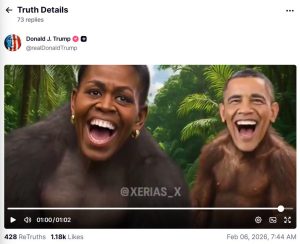
The video’s content recycled baseless claims that the election was stolen from Trump, but its ending superimposed the Obamas’ faces onto primate bodies, evoking historical stereotypes that have fueled anti-Black racism for centuries.
This is the racist video Donald Trump posted.
This is where we’re at. pic.twitter.com/kH49rMWfVH
— Mukhtar (@I_amMukhtar) February 6, 2026
Sources reported that the depiction was intentional, appearing as a standalone clip inserted into the conspiracy montage, not merely a meme. Trump’s decision to share it during Black History Month amplified the perceived deliberate provocation, with critics like California Governor Gavin Newsom and former Obama advisor Ben Rhodes labeling it “monstrous” and a sign of unchecked bigotry.
Reactions poured in across social media and news outlets. On X (formerly Twitter), users shared clips from CNN’s John Berman pressing White House spokesperson Melissa Haridopolos on whether Trump should remove the post. Haridopolos dodged, stating she hadn’t seen it and focused on “elevating the conversation,” while emphasizing control over her own actions.
Another viral video featured Trump himself in an older interview claiming, “I am the least racist person there is anywhere in the world,” juxtaposed against the recent incident, underscoring the irony. Accounts like @CalltoActivism amplified the story, declaring, “There’s no coming back from this,” and urging condemnation of defenders.
This isn’t an isolated event in Trump’s second term. Just weeks earlier, in a January 11 New York Times interview, Trump lamented that civil rights protections led to white people being “very badly treated,” framing affirmative action as reverse discrimination. PBS News Hour reported on the administration’s use of rhetoric echoing white nationalist groups, including campaigns borrowing imagery from extremist circles to justify policies like immigration crackdowns. Videos from these efforts, such as those promoting “Operation Metro Surge” and visa freezes targeting African nations, have been criticized for dog-whistle racism aimed at preserving a “predominantly white America.”
Broader implications extend to policy. Trump’s posts coincide with initiatives like pausing immigrant visas for 75 countries, mostly African, and equating diversity with incompetence. Critics argue these videos normalize hate, potentially inciting division. A C-SPAN clip resurfaced Trump’s past remarks on interracial relationships, further fueling debates on his racial views. MSNBC’s Joe Scarborough contrasted this with economic priorities, noting Americans prefer discussions on jobs over “racist social media posts.”
As backlash mounts, calls for accountability grow. Yet, Trump’s base often dismisses such incidents as media overreach. This video, however, marks a stark escalation, reminding observers of persistent racial fault lines in American politics. With midterm elections looming, it could reshape voter alignments, particularly among minorities and moderates weary of divisive tactics. In sum, these recent posts underscore a pattern: Trump’s use of video to amplify controversial racial narratives, blending conspiracy with bigotry in ways that challenge democratic norms.